
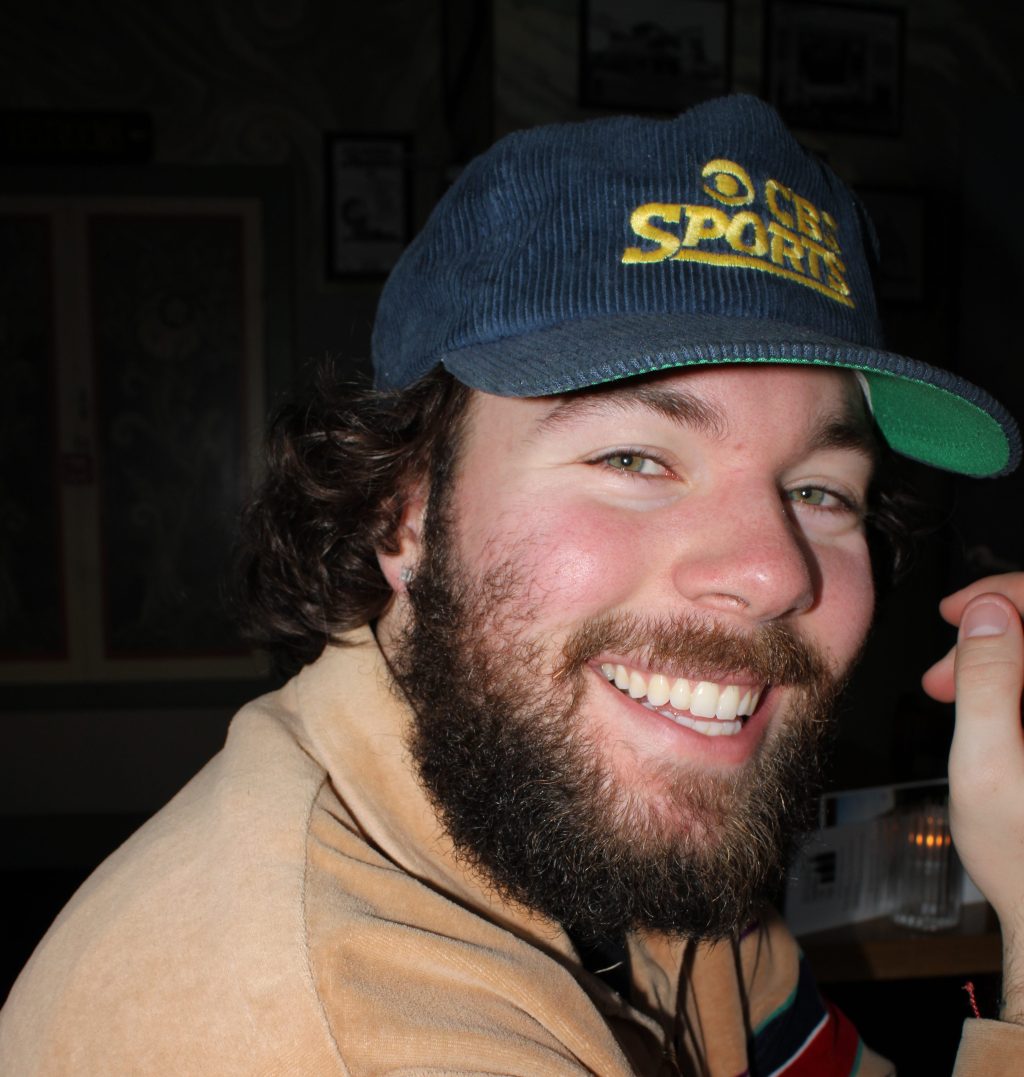
Dr. Roc Rochon brings fresh vision to the SLAM department

“I don’t study sport because I love it,” said Dr. Roc Rochon (they/them), Sport Leadership and Management (SLAM)’s newest professor. “I study it because it connects people and helps us ask bigger questions about oppression, power, and culture.”
Rochon grew up in Connecticut, where sports were a constant in their life. Volleyball, softball, basketball. Those experiences also revealed something bigger: not every team had the same resources. Their high school switched coaches almost every year, equipment was limited, and compared to wealthier schools, opportunities were uneven. That stuck with Rochon. “Sport became an entry point to talk about oppression and power,” they explained. Rochon went on to study Sport and Leisure Management at Eastern Connecticut State University. During their junior year, a sport and society class sealed the deal. “I knew then— I wanted to teach that class someday.”
After undergrad, Rochon earned a master’s degree in Curriculum and Instruction at the University of South Florida. While many of their peers studied sport administration, Rochon leaned into questions about identity, inequality, and culture. Their Ph.D. at Florida State University dug even deeper into critical sport studies, focusing on grassroots movements and resistance. At the same time, Rochon worked in residential life, often in halls full of student-athletes. That role let them combine athletics with social justice programming, giving them a front-row seat to how sport impacts student lives.
After a postdoc position at UConn, Rochon decided it was time for the Pacific Northwest— and ultimately, Pacific University.
One of Rochon’s biggest projects is something they founded called “Rooted Resistance.” At first, it was just Saturday boot camps in a Tampa park: bodyweight workouts, calisthenics, and a chance for queer and trans folks to move their bodies without judgment. But it quickly became more. “People started sharing their stories— about gyms, about fitness, about self-consciousness,” Rochon said. “It wasn’t just workouts. It was about connection.” The group still exists through Instagram, and Rochon hopes to bring it back to life here in Oregon. They imagine outdoor workouts on campus green spaces or in Portland parks, blending fitness with community storytelling.
Ask Rochon about teaching, and they’ll tell you it’s all about creating invitations. They want their classes to feel like open spaces where students can share personal stories, revisit ideas across the semester, and not shy away from hard questions. “I want students to feel this class is an invitation— to learn, to share, to challenge assumptions,” Rochon explained. In SLAM, that means more than just reading textbooks. Rochon plans to use case studies of athletes like Muhammad Ali and Maya Moore to explore how sport and activism collide. They’re also excited to expand internship opportunities, connecting students with organizations where they can both learn and contribute.
Rochon’s own athletic background runs deep— they played two years of college softball before shifting into powerlifting. These days, they’re into strength training, long walks, biking, and stretching. They’ll tell you they’re not competitive by nature, but they love the feeling of teamwork and connection that comes with sport. Their playlists are equally well-rounded. Think violin and hip-hop mashups from artists like Damian Escobar and DSharp, plus a healthy dose of SZA. “If it has a good beat, I’m in,” they said with a smile.
What really drew Rochon to Pacific was how the SLAM program itself was created— out of student voices. “That shows me students here are deeply engaged, and faculty are listening,” they said. Now in Oregon for the first time, Rochon is energized by the Pacific Northwest outdoors and the possibilities for creating inclusive community spaces. Whether that’s boot camps in local parks or fresh collaborations with community organizations, their focus is on connection, growth, and sustainability.
At the end of the day, Rochon wants students feeling like their stories matter. “I want students to leave class feeling like they’ve been invited into something meaningful,” they said. And with Rochon on campus, that invitation is wide open.
 Pacific Index
Leave a comment