
Senior Sydney Cantrell shares what the potential end of SNAP benefits means to her
If you’re a hungry student, don’t look to Oregon’s Supplemental Nutrition Assistance Program (SNAP) to help you– at least not until the federal government is back up and running. With the shutdown of the federal government, SNAP benefits have been suspended without federal funding—and with no clear answer in sight about how long the lack of assistance for food expenses will last for some 40 million Americans. “No one has really any idea what’s happening,” admits senior Syd Cantrell. “It’s scary when it’s something that you rely on, and it’s something that you’re used to, and something that you really need. And not knowing whether or not it’s going to be available anymore, or for how long.”
Cantrell has been receiving SNAP benefits for about a year, after applying for the program when she moved off campus. “I found out about it in my FYS class,” Cantrell recalls, pinpointing when she first learned what SNAP was. A teaching assistant raved to the class about the many benefits of SNAP, especially for college students and encouraged each of them to consider applying if they needed it. “I knew I’m going to be focusing primarily on school and not making enough to be able to support myself when it comes to food and gas, so it was just kind of
a given of something I needed to do.”
After having the comfort of reoccurring SNAP benefits over the last year, Cantrell wasn’t enthusiastic about the rumors of those benefits ending. November 1st is the doomed day that the Oregon Department of Human Services notified as the end of benefits. On a Frequently Asked Questions document published on Oct. 22, the department warned that November benefits won’t roll out unless Congress passes a funding agreement by Oct. 31. Food assistance programs fall under the funding of the US Department of Agriculture (USDA), and while the department has a
reserve of about $6 billion, the USDA argues that they won’t dig into that fund to cover November’s benefits. While many states have reassured that they’ll do what they can to allocate funding to SNAP, the USDA notes that they won’t be reimbursing states for this enormous financial burden.
“I think I first found out from hearing people and seeing things on social media,” she notes. “I would love to have known sooner because I think maybe I would have picked up some extra shifts or spent any extra money I had a little differently– maybe saved it in preparation for having to pay for groceries.” Time is one thing the public was not given much of. Cantrell typically spreads her benefits out to last for three weeks, but her benefits are hardly enough to last for the remainder of October, let alone to stretch through November.
Cantrell admits that some tighter regulations on SNAP wouldn’t bother her, but receiving no money at all is daunting, and not just for her. “I don’t know anyone who’s not on SNAP,” she ponders. “As a full-time student, it’s almost impossible to work full-time, and without a degree it’s hard to get a job where you make enough to support yourself.” Cantrell is currently a caregiver, sometimes working up to 30 hours a week on top of school just to rack in enough to pay rent, utilities, Wi-Fi, garbage, and more.
“Like I could work and get a job where I made more money, but then I wouldn’t be getting patient care experience that I need to get into the schools that I’m applying to,” Cantrell explains. If SNAP benefits did cut out for all of November, or even into the winter months, she’s prepared to pick up more shifts, but it’s not the most desirable option. “I’m still a full-time student, I’m working on my capstone, schools a lot right now– so hopefully I would still be able to balance school with working extra shifts. I’ve already been looking at getting a second job in the spring if I’m not on food stamps.”
Cantrell’s reality is unfortunately not a rare one. Many students at Pacific juggle work and school, which leaves little room for rest. “Everyone I talk to who’s working and in school is just super busy and super exhausted all the time, and I think that having your food covered, or at least most of it, is super important to help us focus on our studies,” she illustrates.
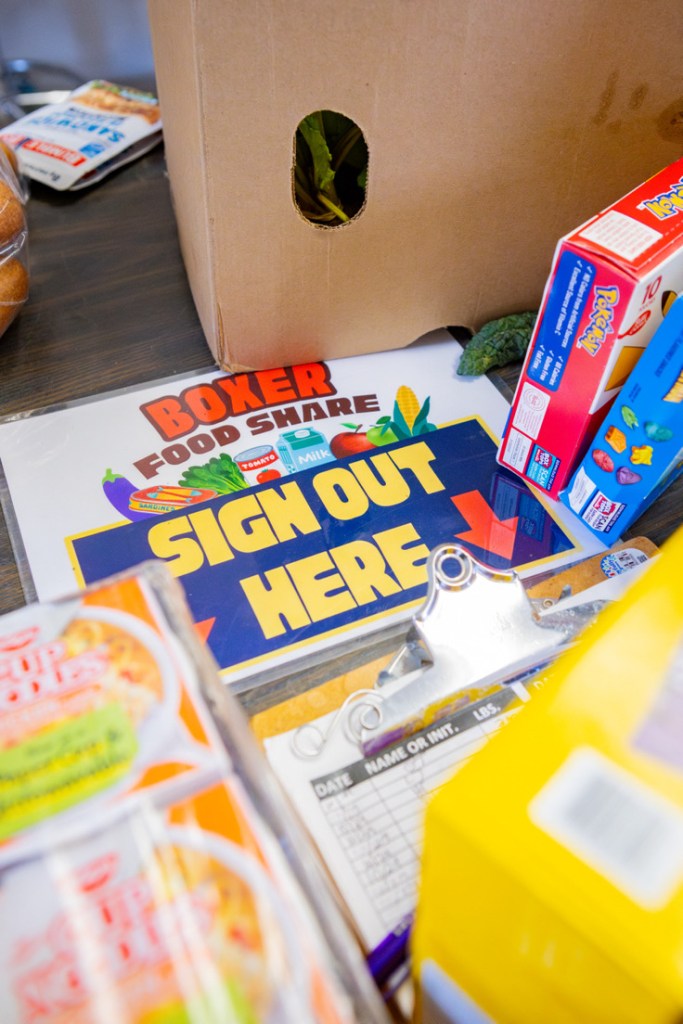
The bright side of this dark situation is that Pacific is a community who supports one another. Ron Calkins, manager of Boxer Gardens and Boxer Food Share, reassures that the food share is aware, and very sympathetic to students’ situation. “It’s hard to react to something that hasn’t happened yet, or may not happen, but possibly could happen,” Calkins expresses, confirming that no matter what happens, they’re preparing for the worst just in case.
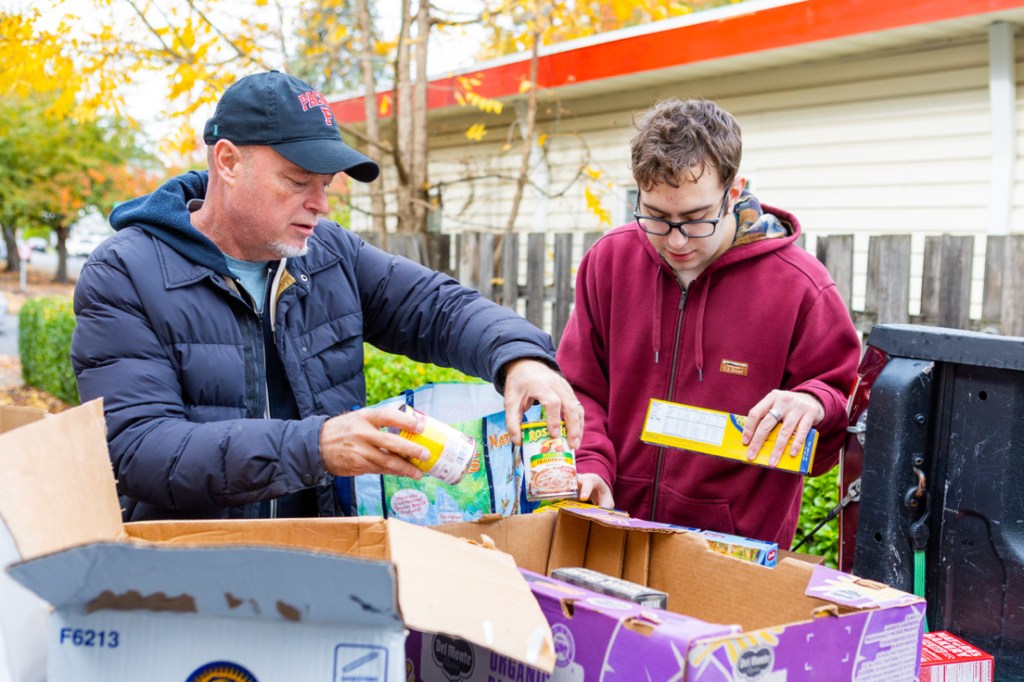
Calkins explains that students have been relying on Boxer Food Share more this term than ever before. Whether that’s due to an increase in food costs, a decrease in SNAP benefits, or just more awareness of student resources, Calkin expects the demand to only continue growing. “We’ve probably spent three times more this term than we have any other term in the past,” he shares while loading donations into the back of his truck. In the aftermath of Homecoming, alumni
banded together to make a mass donation to the food share– right in time for the dissipation of SNAP.
Boxer Food Share is plum full for the time being, but the future is uncertain. Calkin mentions a plan to portion off space in the Boxer Gardens for more food sources instead of growing flowers or trees. “We’re expanding our garden spaces, so that in the future we can provide more of that stuff for the student body,” he reveals, displaying the forward thinking plans the gardens have in the works to meet students growing demands. Calkin is always looking for the next way to meet
student needs, showing true tenacity despite the situation.
“Before you go shopping, come visit the food share,” Calkins welcomes. “Plan your meals ahead of time and then make a meal with friends so you can share, that way you can maximize your food dollar.” Calkin urges students to reach out to him with concerns, questions, or ideas, expressing that his main objective is to help.
The future is uncertain, but as the clock races out, the Pacific community prepares to get through it together, no matter whether SNAP lives to see another day, or dies in the shadow of the government’s shutdown.


 Pacific Index
Leave a comment