
A Summer Research Project dives into hidden issues with the Olympics
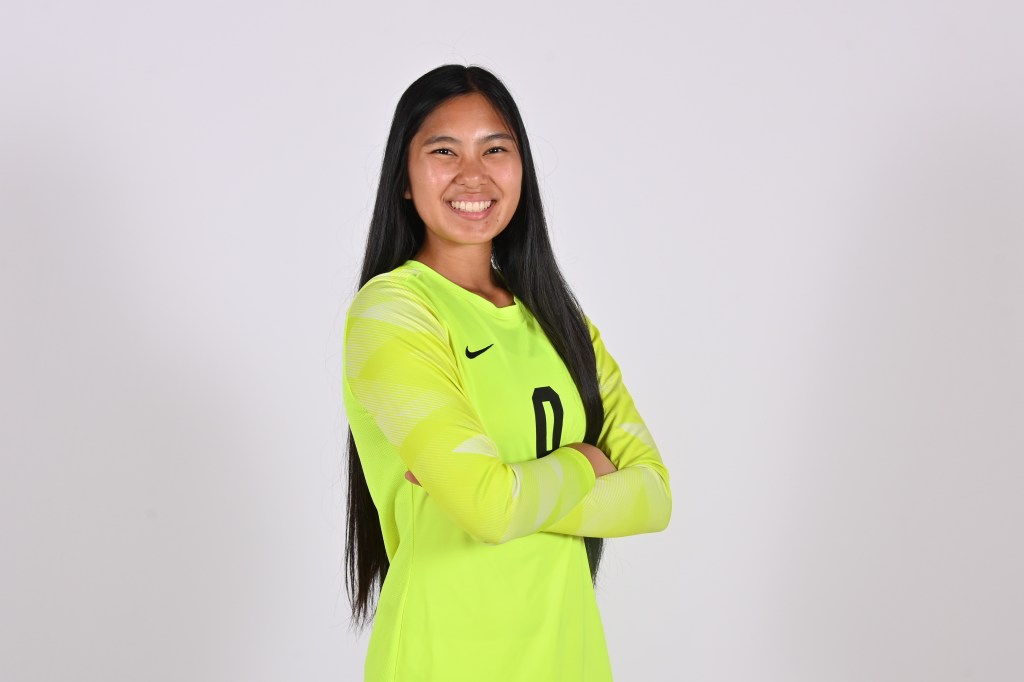
Kylie Pascual, a senior Political Science major, and soccer goalkeeper here at Pacific, spent her summer thinking about “sportswashing.”
No, not cleaning dirt stains from jerseys, but sportswashing, which is not metaphorically too different. It is, to put it simply, when a country or organization uses sports to either cover up their own wrongdoing or to boost reputation above their malignancies. Think, Russia hosting the Winter Olympics in 2014 and the World Cup in 2018, all at times when their government was being accused of war crimes, or Saudi Arabia using soccer and golf tournaments in recent years to distract from allegations of human right abuses.
Pascual’s research, though, was not necessarily historically: It focused on the upcoming LA Olympics. And, unlike much of the body of work on sportswashing, did not focus on an authoritarian government, but here in the United States, within a democracy.
Funded by PRISM Summer Research Program, Pascual worked with Professor Jules Boykoff, an author of several books on the Olympics and who specializes in the politics of sports—and a former soccer player himself.
“There hasn’t been a lot of research into sportswashing in democracies, it’s largely been studied in authoritarian governments,” said Boykoff.
For Pascual, the initial research process into sportswashing and the Olympics was a little overwhelming, as she had to get used to handling long hours of research, six or seven hours in a row for example. “There was definitely a learning curve at first,” commented Pascual, who ended up adjusting to the new workload after the first week or so. “I’m really proud of myself for that,” said Pascual happily.
Parts of her research included reading through 20th century news articles, which she used to compile histories of the other two Olympic games held in LA (1932 and 1984). Those data points served for comparisons.
Another challenge that Pascual and Boykoff had to grapple with was the ever changing landscape of sportswashing and U.S. politics. “News and current events were changing our research even as we were writing the (research) paper,” expressed Boykoff. Despite these challenges, the group was able to finish their paper within the ten week timeframe—and both Boykoff and Pascual agree that they worked very well as a team.
For Pascual, having a paper in an academic journal is super important to her, and is also something that she’s extremely proud of. “Hopefully this will be the first of many papers that will come that other students will use to make their own papers,” Pascual added optimistically.
The two are presenting the project in a sociology conference in Seattle, Wash. on November 6.

 Pacific Index
Leave a comment