
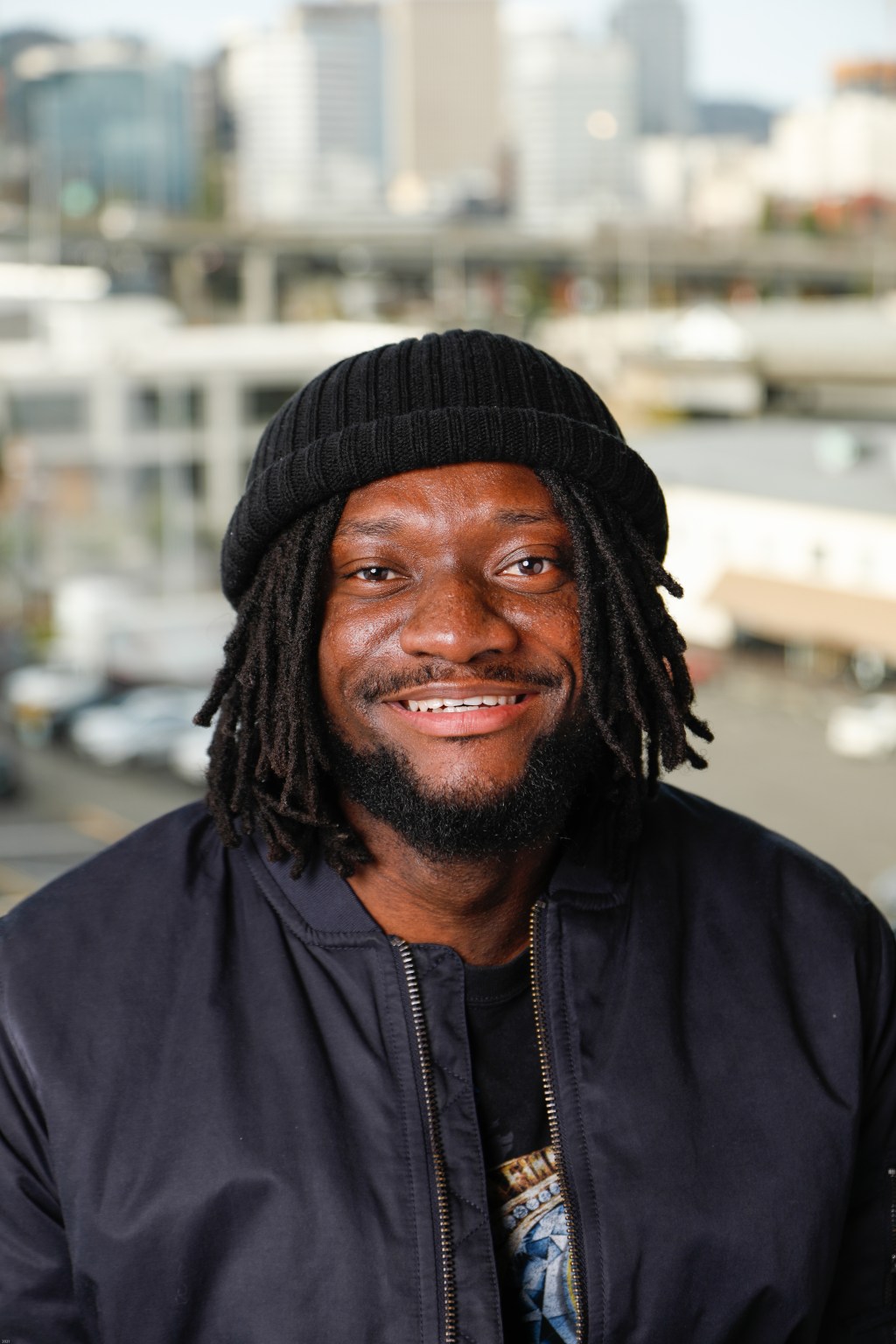
Jaye Cee Whitehead updates the Pacific community with the university’s plans for restructuring
Almost exactly one year ago, the Pacific Index shared the news of the university’s plans to restructure. Since then, a lot has been set in motion, although details remain elusive.
To update us, The Dean of the Division and College of Undergraduate Studies, Jaye Cee Whitehead, sat down to share information with the Index.
“The idea was to, instead of having disciplinary-based schools, to have interdisciplinary student facing schools that weren’t actually organized around like faculty governance,” explains Whitehead. “They’re organized around what kind of interests do students have?” Whitehead is referring to the structure of colleges now and the logic behind dissolving those. In place of the schools of arts and humanities, natural sciences, social sciences, education, and business, Pacific will have four schools that are more fluid and abstract. The titles and descriptions of these schools are still under-works, but the main concept is to have a school of creativity and arts, health and human potential, culture and environments, and innovation and discovery.
“So many times in academia we create these units that become these silos that are just like boundaries,” Whitehead elaborates. The idea of having more fluid schools is to allow students the ability to seamlessly move between them. Essentially, each student will choose what school to be a member of. The school doesn’t need to match up with your major per se, it just interesting to you. Once signed up as a member of a school, you can access all of the resources within that school and even switch your membership as you wish. (Join the quidditch team perhaps?)
“The idea is that in each one of the schools, you’re going to have some professional development associated with it that’s based on what your career path is,” she continues. “While we’re building these schools, we’re also going to be building a new unit that is outside of the colleges, but it operates like an opportunity hub essentially.” This ‘opportunity hub’ will function as a networking connection space of sorts. Students will be able to reach out to the individuals in these spaces to set up internship and career opportunities. The concept behind this is to allow students to gain experience outside of the classroom that links them to the workforce, while also allowing them to explore other schools and find community.
Whitehead shares that the schools are meant to help students connect with a larger community, especially because many of Pacific’s majors are quite small and can leave students with only a handful of classmates and professors to interact and connect with. “One of our biggest objectives…is for students to find a place for academic belonging in addition to what they have in their major,” Whitehead expresses.
One thing that Whitehead stresses is that students do not have to worry about this process affecting their majors. As usual protocol, changes may come to majors due to routine yearly evaluations, but the restructuring process plays no part in this. However, students will certainly begin noticing the restructuring changes soon, as Whitehead expects the schools to be in place at the start of the 2026-27 academic year. “Our goal is that, you know, early fall we’ll be able to have a name, that we will have advisory councils that help us get to the name, our student led councils, and then that we have a mission, vision, and values for each of the schools,” she illustrates.
Whitehead is working on this process with a handful of faculty members, staff from student affairs, and a current student. The process has already reached the point where faculty have been assigned to the new schools—which they choose Whitehead points out. “We’re also working on a framework for student advisory councils, which we want to be part of the schools,” she reveals. “It is actually students in advisory capacity telling faculty, ‘Hey, I’m really interested in this, I wish you would do something like that.’ So that whatever the faculty work on is actually a reflection of what the students care about.”
The next step that Whitehead and her crew are working on is communication. A petition against the restructuring has called out the university for their lack of openness about the plans and steps for restructuring. “I just don’t think that we’ve perfected communication,” she admits. “I think there’s more that we can learn.” Whitehead ensures that the lack of communication hasn’t stemmed from malicious intent in any way, and in fact she understands that communication needs to be better, which is why she’s so focused on it at the moment. “Once we can get some membership for advisory councils, I think that’s going to help,” she offers. “Just getting the students more involved and not just being told what’s happening, but being a part of it, and influencing it.”
“It’s weird, outside of the box speaking, and it’ll take a while for people to actually understand what can be done with these new units,” Whitehead acknowledges. “My hope is that people take a really innovative and creative approach and just say, ‘We can do what we want with these.’” Whitehead’s vision for the future of Pacific is sure to be unlike anything the university has experienced, and it may just change the very foundation of how students think about and participate in higher education.
Check back in with the Pacific Index for weekly restructuring updates.


 Pacific Index
Leave a comment