
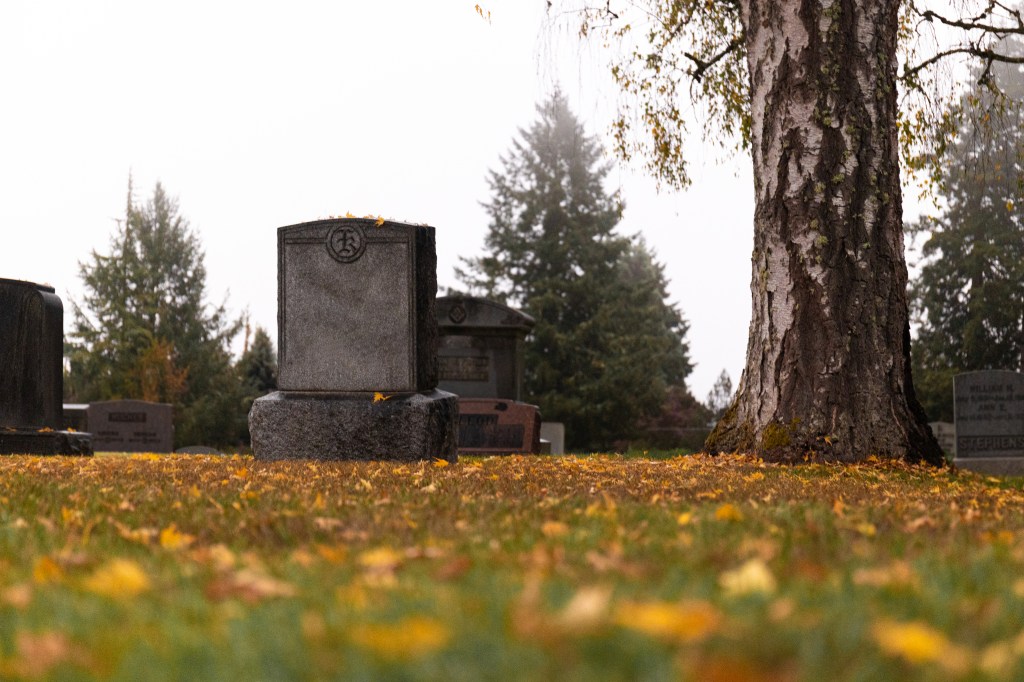
The reoccurring stories and accounts of ghosts sighted in Portland’s Shanghai Tunnels
Last Sunday, I found myself standing outside in the midday sunshine atop one of the most haunted places in Oregon, or supposedly haunted depending on who you talk to. According to the guide of Portland’s infamous Shanghai Tunnels, Doug, there’s no place that’ll give you more goosebumps than the dank, dark tunnels beneath Old Town Portland. Naturally, that makes it the perfect place to visit during the already spooky month of October. “They [Portlandghosts.com] ranked this area the most haunted space in Portland,” Doug shared, his bowler hat casting shadows over his face. “So, we’re number one, how about that!”
Atop the Shanghai Tunnels is a massive building now functioning as a cozy pizza parlor and brewery, but a hundred and fifty years ago the building was known as the Merchant Hotel. Constructed in 1880, the hotel was a place of wealth and splendor—and, its share of criminal operations.
“Despite the fact that this place was so posh, there was a brothel on premise,” shared Doug. “And that’s where we begin to talk about our resident ghost, Nina.” Doug waved his arm towards the top floor of the building, his printed sweater shifting around his squat torso. “Nina lived and worked here in the brothel and that was on the fifth floor,” he began. “She did not want to be here; she didn’t want to be doing this, and it’s believed that she was sold into this.” Doug explained that Nina was offered a deal by a group of missionaries; if Nina spilled the beans on the operation, they would help free her. “Several days later, Nina’s body was found at the bottom of the elevator.”
Nina’s killer was never found, but it’s suspected to have been the owners of the hotel, or even corrupt police who the missionaries reported their findings to. Regardless, Nina has been the main spirit to haunt the premises of the hotel and tunnels, but not the only one.
I, and the rest of the tour group consisting of intrigued tourists and paranormal enthusiasts, followed Doug through the comfortable restaurant to a door that led to the basement. The uneven wooden stairs led to an expanse of darkness; perhaps, though, the most terrifying part was the smell. Whether people had actually died in that basement or not I can’t say, but it sure did smell to be true.
My first thought upon seeing the heavily shadowed basement that reeked of something spoiled was that surely the owners of the restaurant wouldn’t still be using the place. Unfortunately for their poor employees, they are.
“I recall for you June of 2023,” Doug said in a deadly tone to open another scary story. As his tale went, a bartender by the name of Ashely had pranced down to the basement to change the beer taps, but as she was doing so, she heard, “as if amplified through a screechy microphone, extremely loud and aggressive growling.” Doug looked around at the group, and with a dramatic pause claimed that Ashley never stepped foot in the basement again after that day.
After sharing that chilling story with the group, Doug cheesed and signaled for everyone to follow him through a door into a room thick with blackness. Once inside, we took a short break around a low, wooden table decorated with fake candles propped on each corner. Every member of the group gripped a plastic lantern that mimicked a wobbling flame. It felt like we were about to participate in a séance, which is probably what prompted a nervous member of the group to stand back away from the table.
No ghosts were summoned, but Doug did give us a gruesome rundown of the historical purpose of the tunnels. Portland had a booming maritime industry around the same era that the tunnels were created. Portlandian’s dabbled in shipbuilding and cargo shipping, utilizing the Willamette as an artery to the Columbia and then the open ocean. “There was however a built-in problem,” Doug contended, his features indistinguishable in the darkness. “They couldn’t seem to keep crew members on board very long.”
The solution the owners of these industries came up with was “shanghaiing,” as a reference to the Chinese city where many of the ships traveled—or, in plainer terms, kidnapping. Doug painted the scenario of shanghaiing like this, “You’re a guy drinking at the bar. Unbeknownst to you, the bartender puts some opium into your drink. You consume this drink and then you pass out on the bar. Next thing that happens is the floor beneath your bar stool opens, sending you tumbling down a shaft into a tunnel, at which point you are dragged from here, four blocks to the harbor where you’re forced to work on a ship.” It is estimated that as many as 1500 people were Shanghaied each year in the later decades of the 19th century.
After our history lesson, the group blindly followed Doug deeper into the dark tunnels to a room that hosted reinvented cells. These cells were solid wooden boxes that were intended to hold shanghaied men or women who were being sold into prostitution. Doug mimicked the motion of dragging a body. “The captors would shatter shards of broken glass on the floor to discourage anybody who had any smart ideas about trying to escape.” Although sparse now, after years of souvenir collectors, the tunnels were lined were hundreds of boots, as kidnappers would also pull off their captives shoes so they wouldn’t think about running across the glass-lined tunnels.
Aside from kidnapping and prostitution, the tunnels were also a hotspot for illegal gambling. It’s suspected that the tunnels finally ceased operation in the 1930’s, but the ghosts are said to remain to this day. Doug shared the theory of Ailica, a paranormal medium (those who claim to be capable of communicating with the dead). “Just like there’s human trafficking, there’s soul trafficking,” he said in a low voice.



 Pacific Index
Leave a comment