
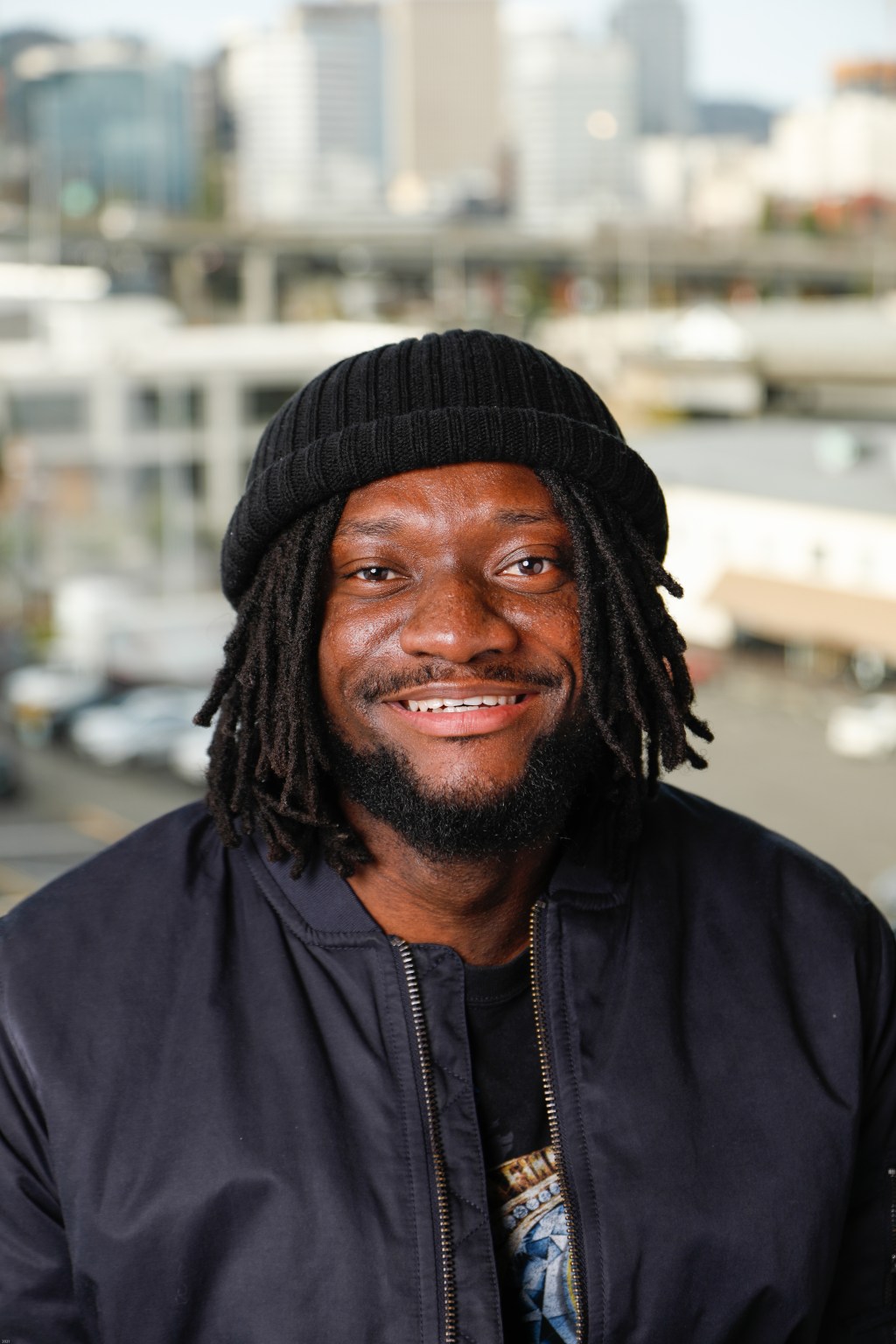
Alumni Andy Isokpehi comes to speak at Pacific
By Vivian McCullough
Andy Isokpehi is a 2020 graduate from Pacific, where he played basketball for two years 2018-2020. He was born in Nigeria, and as a kid, moved to the Bay Area. He is both a Celtics and Warriors fan. Since graduating, Andy has set up an afterschool basketball program in Portland.
He will talk about his transition from player to program manager and coach as part of the Future Sport Professionals Club’s 2026 luncheon series. Tuesday, March 17 at noon – 1 pm in AuCoin 217.
What skills from your time playing collegiate basketball have translated most directly into your current work?
The most important skill that has translated from collegiate basketball into my current work is discipline. As a student-athlete, you quickly learn that success depends on your ability to show up every day, whether you feel like it or not. Balancing academics, practices, workouts, travel, and games requires structure, accountability, and consistency. That same discipline now drives how I run my business. Entrepreneurship is not glamorous day to day. It is about doing the small tasks consistently.
How do you define success at this stage of your career?
At this stage, I define success as consistently showing up every day and contributing something meaningful to the business. Around one in five new businesses fail within their first year, often because people underestimate the level of consistency required. If I am disciplined enough to keep showing up, I am already ahead of much of the competition.
What do young athletes most need that they often don’t realize?
Young athletes need someone who genuinely believes in them and helps build their confidence. Talent matters, but confidence and mindset often determine how far an athlete can go. Many young players do not realize how much their self-belief impacts their performance. When a coach takes the time to invest in them, teach them the fundamentals, and reinforce their progress, it can completely change how they see themselves, not just as athletes but as individuals.
What inspired you to start your own coaching business?
I have always had a passion for entrepreneurship. Earlier in my career, I started a few businesses with co-founders. While those experiences taught me a lot, I realized how difficult it can be when partners are not fully aligned. After my last business dissolved, I knew my next venture would be something I owned outright, something where I could fully control the vision and direction.
Basketball has always been a passion of mine, so I had a theory. Could I build a business around skill development and mentorship? Instead of overthinking it, I decided to test it. Many people have great ideas but wait for the perfect time or spend too long debating internally or with others. What I learned is that clarity comes from action. I tested the idea, refined what worked, adjusted what did not, and discovered not only that it worked but that I genuinely loved doing it. That is how the coaching business began.
In the next few years, what are your hopes and plans for growing your business?
Over the next few years, I plan to continue expanding by hiring and developing additional coaches so we can scale responsibly while maintaining quality. I would like to partner with more schools, offer more 1 on 1 training, and introduce structured summer and winter camps. Growth is important, but doing it in a way that preserves the culture and values of the program is just as important.
What advice would you give Pacific students who hope to work in sports or other competitive industries?
In your first few years, prioritize developing a valuable, transferable skill. Once you truly master something, whether it is coaching, sales/marketing, operations, or leadership, you can leverage that skill in countless ways, including starting your own business.
Also, do not spend too much time romanticizing ideas. The real world rewards action. Test your ideas as quickly and affordably as possible. You will learn far more from execution than from endless planning. Start small, adjust, and keep going.
 Pacific Index
Leave a comment