
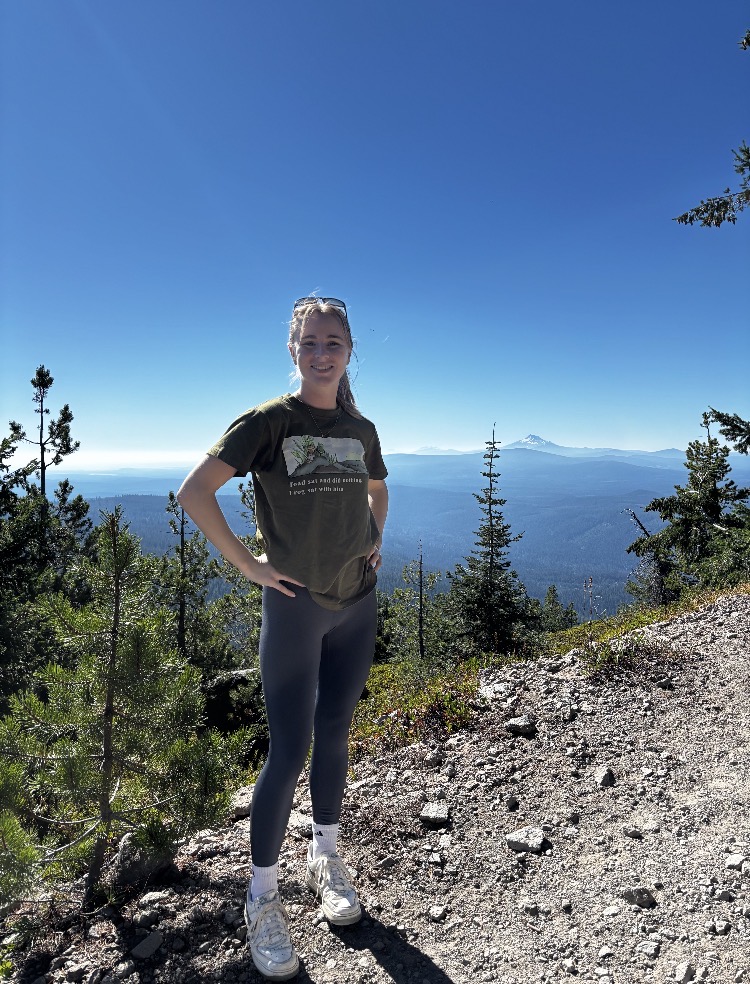
Junior Emma Seres divulges the details of the biocolonialism focused spring break travel course in London
“I think it’s super cool to be able to go with a class,” shares junior Emma Seres, giving all the details she can about the spring break travel course she is planning to take. “Like, we all have the same goal of learning and developing our critical thinking skills.”
The travel course Seres is partaking in will certainly challenge her and the rest of the group who will be staying in London over the course of spring break. The focus of the group is biocolonialism.
“It’s basically plants and biology intertwined with colonialism,” Seres explains. “If you think of the British Empire basically colonizing other places and exploiting their resources and their knowledge…and especially in science, the age of exploration, and scientific advancements.”
Seres is an environmental biology major, so this course is right up her alley. While she already has a solid understanding of biology, the prep-course she’s in right now is bridging the gap between biology and colonialism. “We’re talking a lot about relating plants and natural systems, specifically the science pathway, to colonialism and how for like hundreds of years indigenous people have been exploited for their knowledge and not given credit for it,” Seres describes with passion. Much of the subject matter doesn’t sit right with Seres, and she’s not afraid to voice her discontent with the way human systems have vied for power over biological knowledge.
One example of biocolonialism that Seres gives is how the biological naming system came into existence. “The scientific classification naming system that we have, like the Latin names; it’s the Linnaean classification system,” she notes. “It was just this random guy that decided, ‘This is how its going to be done,’ and then took it out to all their colonies and said, ‘This what you’re going to learn and it doesn’t matter what you have in place because you’re a part of our empire now, and that’s just how it is.’” Specifically, she points out India as a victim of this tactic, explaining that while India is now decolonized, there are many lingering effects of biocolonialism, such as what is taught and learned about biology.
In order to really understand what biocolonialism is, what effects it has, and what form it takes, the traveling students will adventure across London and gather their own observations. “I’m so excited,” Seres says with a giddy smile. “There’s going to be a lot of interesting things to see and be able to relate to it.” While the itinerary is not formally finalized yet, Seres describes a trip stuffed full of museums and gardens, with the occasional free time for thrifting and other activities.
“When we go to a museum or a botanical garden…we’re going to be taking field notes of what we notice or observe, or if we get to talk to other tourists,” she expresses. “And then later on, we’re going to reflect on that— like go back and actually deeply think about the day and what we did, and what we learned, and what we saw.” The course also comes with an assigned paper that will reflect the student’s experience and observations in the famous city.
The structure of the course is actually one of the reasons Seres was so eager to take the trip. Her advisor, professor Kara Lanning, is one of the leaders of the course, and Seres was instantly sold on the trip after taking with Lanning. “She’s doing a great job, like structure wise, on the class,” Seres praises. “It’s super deep topics and we’re doing discussions, and we’re having these readings and podcasts, and I know she does a really good job with curriculum, so I was excited to take that on top of something that I’ve already learned about…and I like London, so there you go, it’s a win win-win.”
Seres has already made a few visits to London in the past, but she’s positive that this experience will be unique, mainly because she’ll be getting to do it with a group of students who are just as eager as she is to learn. “My major’s environmental biology, so I feel like having that background on top of learning about colonialism is interesting,” she shares. “It’s definitely a thinker.” Many of the student hopping on the place to London are in the same boat, allowing Seres to not only come to her only conclusions about the subject matter, but also bond with others who are making the same connections she is.
“I want to learn something new very badly,” she admits, expressing what she hopes to get out of this adventure. “This whole class is very interesting and has a lot of potential for mind- blowing moments.” Thankfully for Seres and the rest of the traveling students, those mind-blowing moments are a mere week away, and Seres is absolutely ready for them.
 Pacific Index
Leave a comment