
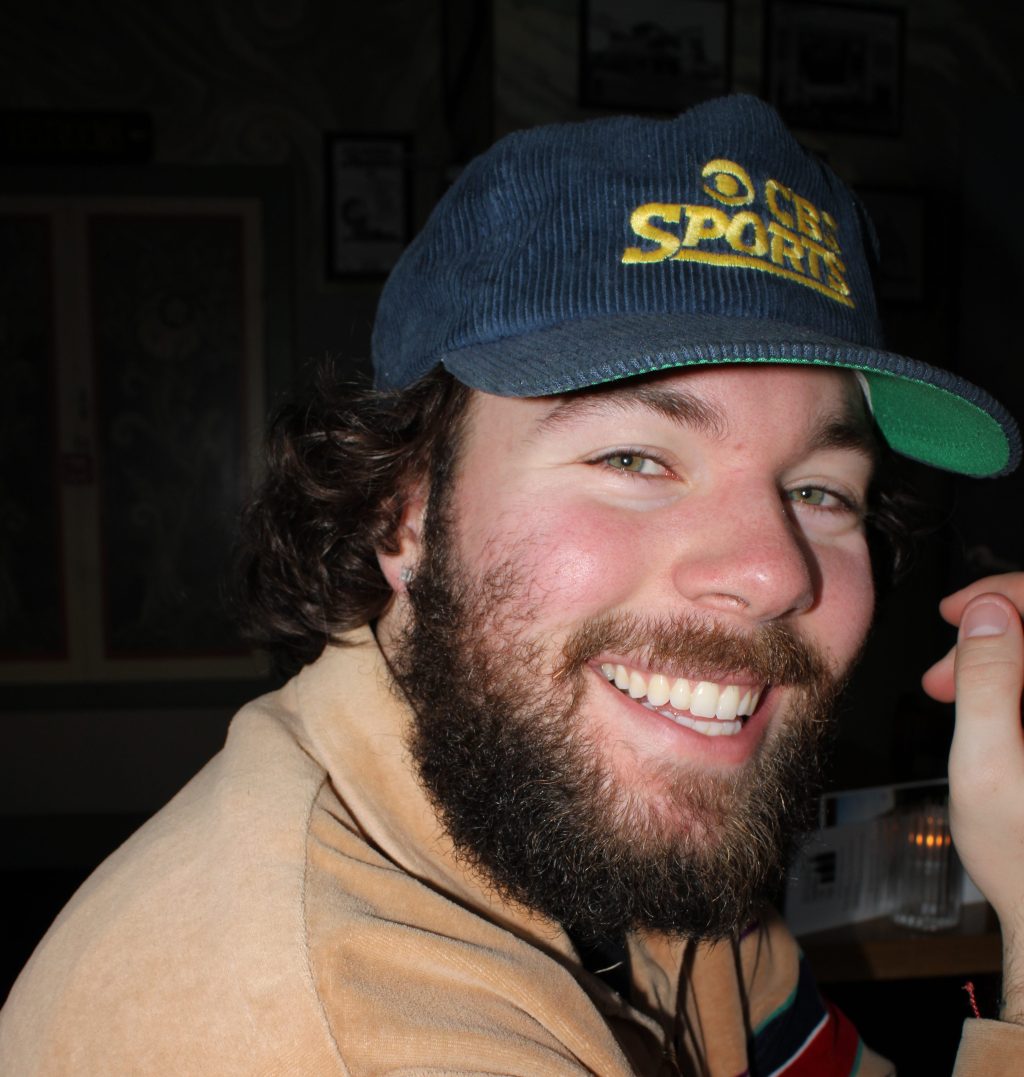
Alumni Patrick Muskat comes to speak at FSP club
By Vivian McCullough
A former Boxer baseball player, Patrick Muskat is now the Director of Partnerships at Official League. He will talk about his transition from player to program manager as part of the Future Sport Professionals Club’s 2026 luncheon series. Tuesday, April 7 at noon – 1 pm in AuCoin 217.
What does the Official League do, and what does your role as Director of Partnerships involve?
PM: Official League is a fully custom headwear and apparel brand headquartered in Portland Oregon. We work with teams, brands, and really anyone who is interested to help tell stories through intentional, carefully designed and crafted merchandise. We work everywhere in the major sports world: MiLB baseball, NWSL soccer, AHL hockey, NBA, NHL, and beyond. As Director of Partnerships, I primarily run our minor league baseball operations, and guide the rest of partnerships team in finding new connections/partners.
How did you get into the sports industry?
PM: I got into the sports industry truly through just playing sports. Official League is owned by the same group who owns and operates the Portland Pickles, a college summer baseball team based in Southeast Portland. I played for the Pickles for the summer between my Sophomore and Junior year. After playing, the staff remembered me, and I was offered a seasonal job with the team the following summer to be the sound engineer for the stadium. I was responsible for in between innings music, walk up songs, sound effects, basically anything that came out of the speakers at the stadium. I took my job seriously and executed well. In the subsequent years I eventually became a full time staff member with the team, and in the fall of 2024, made the switch from Pickles to Official League.
What makes a partnership successful in your experience?
PM: The most successful partnerships I’ve been a part of are ones where both sides are fully bought into an idea. What makes us different at Official League is that we like to sit down and talk with teams about what they want, and what they are seeing from their fans, versus just trying to sell them a piece with the highest margin. Don’t get me wrong we do have a lot of expertise, and we know what sells well with fans (especially since we run a baseball team on the side haha). Once we can understand a team’s vision, it’s a huge leg up when it comes to crafting designs, marketing campaigns, etc.
Are there lessons from your time playing baseball that influence how you approach work today?
PM: Absolutely, I think attention to detail is one great skill that I gained while playing ball, and it’s done nothing but help me in the working world. When it comes to baseball, you need to be precise with just about everything, and especially in college ball, you can’t afford to be sloppy. Whether it was actual in-game skill (hitting/fielding mechanics, 1st and 3rd plays, bunt defense knowledge, etc.) or more general (balancing schedules between class/practice, showing up to practice early, hitting your full workout in the gym with intention, etc.) I always made sure to pay close attention to the details and execute everything that was in front of me to the best of my ability. That has translated very well to the working world.
What trends are you currently seeing in branding and sports merchandise?
PM: What’s old is new again. Vintage styles are in more now than they ever were. We tend to lean that way with a lot of our products. Corduroy hats, satin jackets, 90s’esque windbreakers, varsity style crewnecks/hoodies, etc. Everybody wants something outta 1994-1999, and we’re here for it.
What advice would you give Pacific University students interested in sports marketing or partnerships?
PM: If you want to work for a specific team (or anywhere in sports marketing) don’t be afraid to start on the ground floor with whatever position they’re offering. If you’re able to crush whatever they put in front of you, it gives you more leverage to ask for what you want in the future. Honestly, that applies to any field. The longer you stay somewhere and the better you perform, the more doors start to open.
What role does local culture play in the merchandise your company creates?
PM: Local culture plays a pivotal role in what we do at Official League. It is one of the things that truly sets us apart. When it comes to building successful partnerships, understanding the culture of the place you are designing for is essential. That is what separates ordinary branded merchandise from real storytelling. We aim to create pieces that include fun local easter eggs, thoughtful messaging, and small details that make people think, “Wow, this feels special, almost like it was designed by someone from here.”
What’s next for the Official League in terms of partnerships or growth?
PM: The sky is the limit for us at OL. We have a small but dedicated team that has made real inroads with major sports leagues across the country. We still do not hold a Major League Baseball license, but I think the noise we have been making in Minor League Baseball over the past two seasons will help make that a reality very soon. Beyond that, I would love to see us expand into a few exciting areas such as the NFL, PGA or LIV Golf, and the WNBA.
 Pacific Index
Leave a comment