
By Ezri Thompson
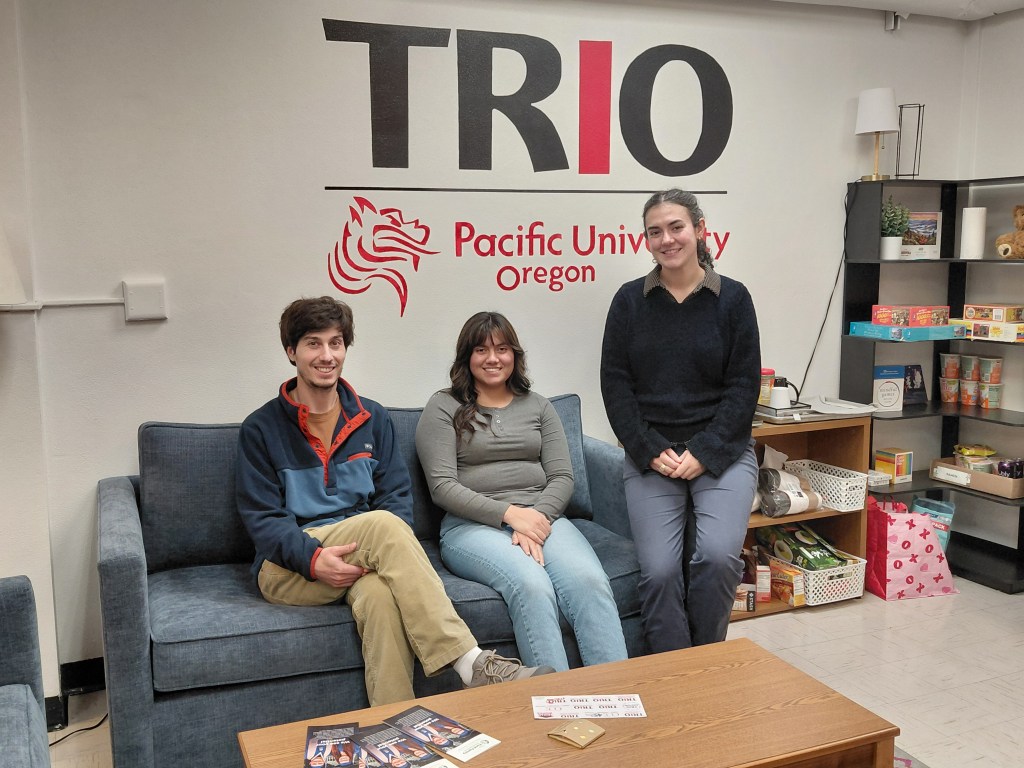
Starting college can be overwhelming. Students are expected to manage class schedules, financial aid, campus resources and a completely new level of independence all at once. For first-generation students, low-income students and students with disabilities, those challenges can be even more difficult. While Pacific University offers many resources to help students succeed, not every student knows where to find them. As a result, some students miss support systems that could make navigating college much easier. One of those resources is the TRIO program.
In late September, TRIO took 18 students to a Portland Thorns game, where they attended presentations from three organizations working with Treasure AI and learned how artificial intelligence can help organizations share information and communicate ideas. While the presentations were informative, one of the most noticeable parts of the trip was how students interacted with one another.
“I think the most valuable benefits are the community and the connection you make with your peers and with your advisors,” explained Abby Thomas, who helps lead the program. “Students really, really benefit from feeling like somebody at their university has their back and feeling connected to something outside of the classroom.”
TRIO is a federally funded program that supports students throughout their college experience. At Pacific, TRIO serves students who are first-generation, low-income or have documented disabilities. Thomas described TRIO as a source of support that helps students succeed academically, professionally and personally throughout their time in college. “I would say holistic student support for how you can be successful from this moment till graduation and beyond,” Thomas said. “Whether that’s academics, career, financial, kind of prepping for what comes next, we really want to help you at every step of the way.” Thomas said the program exists to help students who may not have had the same access to information and opportunities as others. “We want to provide access to that knowledge and support,” Thomas explained.
Many students arrive at college without realizing how different it can be from high school. There are financial aid forms to complete, registration systems to learn, professors with different expectations and new responsibilities that students often have to manage on their own. Thomas said one of the biggest challenges students face is simply understanding all of the information thrown at them during their first semester. “One thing we try and do is just work really step by step to break down a lot of these complex processes into doable steps,” Thomas said.
The program itself has a long history. Thomas explained that TRIO was created during the Civil Rights Movement in the 1960s to help underrepresented students gain access to higher education. The goal was to help students get access to resources, opportunities and information that they might not have had otherwise. The program was designed to help students navigate what Thomas called the “hidden curriculum” of college, including knowledge and experiences that are often passed down through family members who have attended college before.
Today, TRIO continues that mission through advising, financial literacy education, tutoring support, scholarships and career preparation opportunities. Participating students can also apply for internships, fellowships and scholarships available through state, regional and national TRIO organizations. Thomas said these opportunities can help students gain experiences they might not otherwise have access to.
One of the newest ways Pacific’s program supports students is through the College Student Success course. The course was created to give students additional support beyond regular advising appointments. Meeting twice a week, the course focuses on study skills, time management, academic success strategies and finding campus resources. Thomas said the course was designed to help students develop skills that can make college more manageable. “From first year, we are really, really working on building up academic and sort of behavioral skills that can help you be successful in college,” Thomas said.
The course takes a casual and discussion-based approach. Students learn techniques that can help them adjust to college life while also having the opportunity to ask questions and hear from classmates who may be facing similar challenges. The class was created because TRIO staff recognized that some students could benefit from more frequent support as they adjust tocollege expectations.
The course also gives students a consistent place to connect with one another throughout the week. Rather than only meeting with an advisor occasionally, students have regular opportunities to discuss challenges, share advice and learn about resources available on campus.The additional contact helps students build relationships while creating a stronger support network during their first year of college.
As students move through college, the type of support they need often changes. During the first year, many students are focused on building good habits and finding their place on campus. Later, students may begin thinking about internships, graduate school or future careers. Thomas said TRIO adapts alongside students by helping them explore majors, connect with professional opportunities, prepare for graduate school entrance exams and build networks that can support them after graduation. She said the program’s focus evolves as students progress through college. “The process begins to shift from what to do in college and to what to do after,” Thomas said.
Despite the many resources available through the program, not every eligible student joins. Some students are unaware that TRIO exists, while others misunderstand what participation involves. Thomas said one common misconception is that TRIO requires a large amount of extra work or that every student automatically receives scholarship money. In reality, the program is designed to support students in goals they are already working toward while helping them access additional opportunities and resources. Thomas said some students worry that joining TRIO will add more responsibilities to an already busy schedule. However, she emphasized that the program is designed to support students, not create additional stress. “Our goal is to work with good habits, activities, opportunities that we know students benefit from,”Thomas said.
Thomas said many students do not realize they qualify for the program or assume it is not meant for them. Because being a first-generation student, coming from a low-income background or having a disability are not always visible experiences, some students may never consider applying. As a result, they may spend their first semesters trying to navigate challenges on their own when support is already available. Part of TRIO’s mission is helping students understand that asking for help is not a weakness and that there are people on campus ready to support them.
Beyond helping individual students succeed, Thomas believes TRIO also strengthens the Pacific community as a whole. She explained that identities such as being first-generation, low-income or having a disability are often invisible. “First-generation low-income and students with disabilities are everywhere and embedded throughout, but sometimes those identities are invisible and it can feel isolating,” Thomas said. Because of that, students can sometimes feel isolated even when surrounded by others who share similar experiences. TRIO helps create a place where students can connect, share experiences and support one another.
Whether students are attending a Portland Thorns outing, participating in the course or meeting with an advisor, the program’s goal remains the same: helping students feel supported and giving them the tools they need to succeed.
For students who may be unsure about joining, Thomas offered a simple message. “TRIO works,” she said. “It’s brand new at Pacific, but it’s not new to higher education and it really, really does make a difference in our students’ lives.”



Leave a Reply