
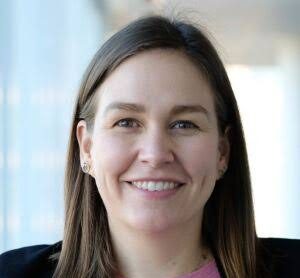
Shannon Bond is a news correspondent and editor for NPR. Noah Gonzalez interviewed her for MEDA 240. She will speak on November 9 to the MEDA 240 class.
Noah Gonzalez: Who are you and what do you do?
Shannon Bond: My name is Shannon Bond, I’m a correspondent and editor for NPR, and I’m on the politics team covering technology, power and influence, AI, elections, etc.
NG: What got you interested in journalism?
SB: “Very short story is that I was spending a lot of time reading the news and thought ‘Oh maybe I could get a job in this’ and the idea of being able to go out and talk to people seemed fun and interesting. So I ended up going to journalism school and I approached it thinking I was gonna become a magazine writer and do, like, long from profiles. But while I was in journalism school, I took a business journals class and I loved it! I was super interested in money and power and the growing power of corporations and how that shaped so much of everyday life.
NG: Where did you get your first job in the field of journalism?
SB: I interned at the Financial Times in London, and was really lucky that an editor there had recommended me for a job opening at their bureau in New York, so I started there in fall of 2008, which ended up being a really terrifying and fascinating time. I started off as a General Assignment reporter. I covered consumer goods for a while, so I was covering Coke and Pepsi and snack food companies back in 2010. Then I became a media reporter, covering the business side of media which is a really great way for any journalist to learn about your own industry.
NG: For the next stage of your career, you joined Alphachat, which became an award winning podcast. What made you join it and what were the experiences?
SB: My colleague at the FT, Carter Garcia, was very early interested in audio, and he wanted to have a space where he could talk about economics and a space where you could have longer conversations with people. He asked me to come onboard and we talked to a bunch of different economists. At one point, I interviewed Emily Oster, who’s an economist at Brown University. At the time, I was pregnant with my son, and she has a very popular parenting book, a book about pregnancy. I was super interested in thinking about evaluating risks and how you think about them during pregnancy. It was a really great experience learning how to think about having to interview somebody on tape. It’s very different from introducing somebody to a written story and how to pace it and it made me think differently about approaching questions.
NG: After working for the Financial Times, you made your move to NPR. What led to you making that decision?
SB: I’ve always loved radio, and my parents always had NPR on in the car, which I learned is a very common experience for people working at NPR. I always had interest and respect for their approach, especially public media. I was also kind of compelled by their public media’s mission.
NG: You mentioned earlier that you used to cover consumer goods when you worked for the
Financial Times. With all the FDA recalls in recent times, how important is that topic now?
SB: The food that we eat, you know absolutely nothing about right? And it’s a part of people’s everyday lives. You’re using these brands and products all the time and you can’t escape them. I certainly see, just as myself as somebody reading the news and thinking about this stuff and the
way we think about health and related topics in this country has really changed and shifted. People are asking different things from these companies as well as the government and thinking about how we regulate food, and public safety and public health.
NG: What was one of the biggest challenges you encountered during your career?
SB: One of the challenges was not being afraid to talk to people, and feeling confident, I would sometimes get in my head a little bit like ‘are they gonna think this question is dumb?’
NG: As you go into year 18 of your career, what do you hope to achieve in these upcoming years?
SB: I hope to have a career in journalism because this industry and the financial model is really tough. This is not about NPR, specifically, but just in general, and very few news organizations, I think, have really figured out a successful financial model, to support what is really, really important work.


Leave a Reply