
By: Miles Durvasula, written for MEDA 240
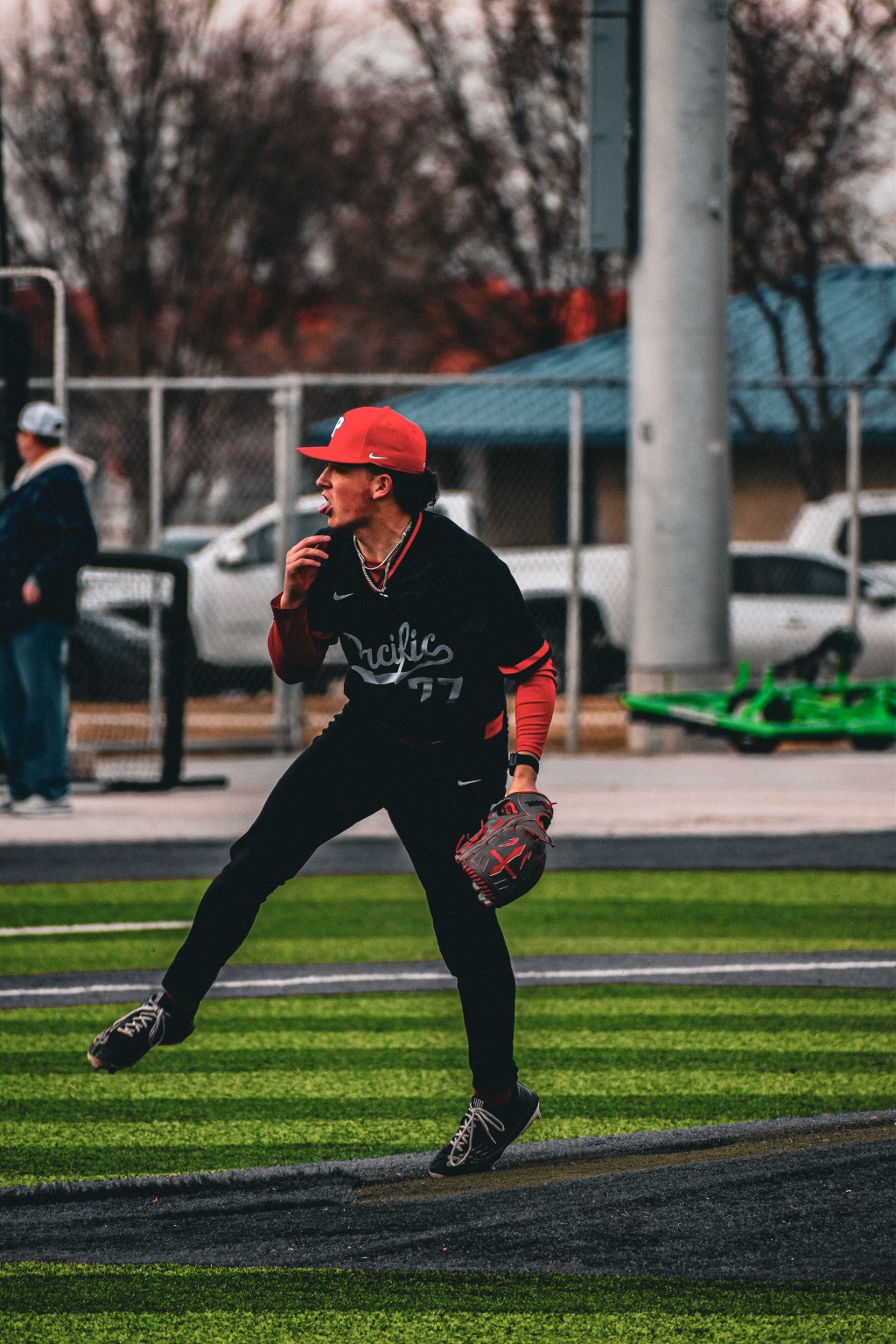
Tavian Gomez loves winning—and freshman year started blazingly for him, a relief pitcher on the baseball team.
Whenever Gomez steps on the field, he turns into Trip T (TTT), the normally friendly smiling guy lets loose and becomes a stern-faced menace going after the opposition with no remorse.
“When I’m pitching it allows me to be my true self and show my competitive spirit without anyone else getting in the way,” Tavian said recently. “I don’t think I get to show that a lot in regular life, it’s a good place for me to show my true emotions and my love for the game.”
Three weeks into his first season at Pacific, Trip T was going strong; already recording 19 outs while allowing just one run, making hitters look silly with his filthy curveball. He quickly became a go-to relief pitcher for the Boxers.
He was on top of the world when all of a sudden his season flipped upside down. In early March, he was getting some work in mid-week in practice and dove for a ground ball. A fluke accident, and he broke his hand. Season over.
A study by the National Institutes of Health discovered that, across college athletics, there are over one million injuries reported each year with one out of 10 considered season ending; or, stated otherwise, nearly one hundred thousand students losing their season to injury every year.
But what many don’t realize is that the injury itself is not the brunt of the nightmare; it is the rehab process, full of gloomy grueling days spent working out pushing through pain with little visible results and no immediate end in sight. This is where Gomez found himself last spring, facing a monstrous pile of rehab and exercises before he could even think about playing.
Approximately 15 percent of athletes who suffer season ending injuries never return to the game—and, moreover, and only 50 percent who do return ever find the same level of success as pre-injury. Beyond the physical repair often lays a rocky terrain of psychological doubt making athletes question if they can trust their body again and if they will be able to perform to the same level of success. These were the very questions running through Gomez’s head as he was slogged through physical recovery, getting ready to return to Pacific for his sophomore season.
Everyday life for a college student is full of different pressures and deadlines. For many athletes their sport is one of the ways they help manage this stress. The field is a place where outside pressures don’t matter, for a few hours each week you get to live worry-free and just play a game with your friends. But an injury creates a whole new world of stress and takes away a primary release from daily pressures at the same time. Instead of playing with your friends, you’re now forced to sit on the sideline and watch them have fun together doing what you love to do. Instead of competing under the sun, an injured athlete’s gameday is lifting weights in a musty fluorescent lit gym.
“Starting off the season so hot I felt like I was on top of the world,” Gomez recalled, “and that got stripped away from me. Going from on top of the world and competing in my best self to just going on the sidelines, it almost felt like I wasn’t there anymore.” He continued, “Usually I’m in control of those situations but it just felt like I was helpless where I couldn’t just work harder or really do anything to make that injury go away sooner.”
“I got lucky having an injury that wasn’t as severe as some other sports injuries,” Gomez shared, “but I still at times felt the no motivation to do rehab or wanting to come back. If those injuries happen over and over and the rehab process has some setbacks, that can lead to more of not wanting to return from injury, especially for pitchers with hurt arms. I’ve kind of come to cherish more of those smaller memories that I might have not noticed before, or just even the opportunity to participate in practice, that’s a blessing for me.”
This fall, Gomez returned to campus nearly back to full health, and returning to action in team scrimmages. He plans to return to the mound this spring at Trip T, and pick up where he left off.


Leave a Reply